November 3, 2026
When asphalt starts showing signs of wear, many property owners reach for a quick patch and call it done. Patching has its place, and it's often the right fix for potholes and badly broken sections. But it's not a complete solution. If the cracks spreading across the rest of your driveway or parking lot are left open, the damage keeps growing underneath, and new problems show up faster than you'd expect.
That's where crack sealing comes in. It targets a different kind of damage and protects your pavement in ways patching can't. Below, we'll explain what asphalt crack sealers fix that patching alone simply cannot, and why using the right repair for each problem helps your pavement last longer.
Understanding What Patching Is Designed to Do
Patching is a repair for pavement that has already failed. When a pothole forms or a section of asphalt crumbles, crews remove the damaged material and fill the area with new asphalt. That restores a smooth, safe surface in that specific spot, which is exactly what it's meant to do.
The limitation is that patching only treats the damaged area. It doesn't address the hairline and medium cracks that may be forming across the rest of the pavement. Those cracks are often where the next pothole begins. Crack sealing fills that gap by protecting the pavement that's still in good shape, before it turns into the next patch job. Think of patching as a repair and sealing as prevention, since each one plays a different role in keeping your pavement healthy.
Keeping Water Out of the Base Layer
Water is the main reason asphalt breaks down. Every open crack is a path for rain to seep below the surface and into the base layer that supports your pavement. Once that base gets saturated, it softens and loses its ability to carry weight. The asphalt above it begins to sink, crack further, and eventually break apart.
Here in Western Washington, long rainy seasons make this especially important. Asphalt crack sealers create a watertight barrier inside each crack, keeping moisture on the surface where it can drain away. A patch can fix one failed spot, but it can't stop water from slipping through dozens of open cracks elsewhere on your property.
Stopping Small Cracks Before They Become Potholes
Most potholes don't appear overnight. They start as small cracks that slowly widen as water, traffic, and weather work on them. Over time, the edges break down, chunks of asphalt come loose, and a hole forms. By the time you need a patch, the damage has usually been building for months or even years.
Applying asphalt crack sealers early interrupts that cycle. By filling cracks while they're still small, you help prevent the deterioration that leads to potholes in the first place. It's a proactive approach that keeps minor issues from turning into structural damage, and it costs far less than repeated patching down the road.
Flexing With Temperature Changes
Asphalt expands in warm weather and contracts in the cold. That constant movement puts stress on the pavement and widens existing cracks. During freeze-thaw cycles, water trapped in cracks freezes, expands, and pushes the asphalt apart even further.
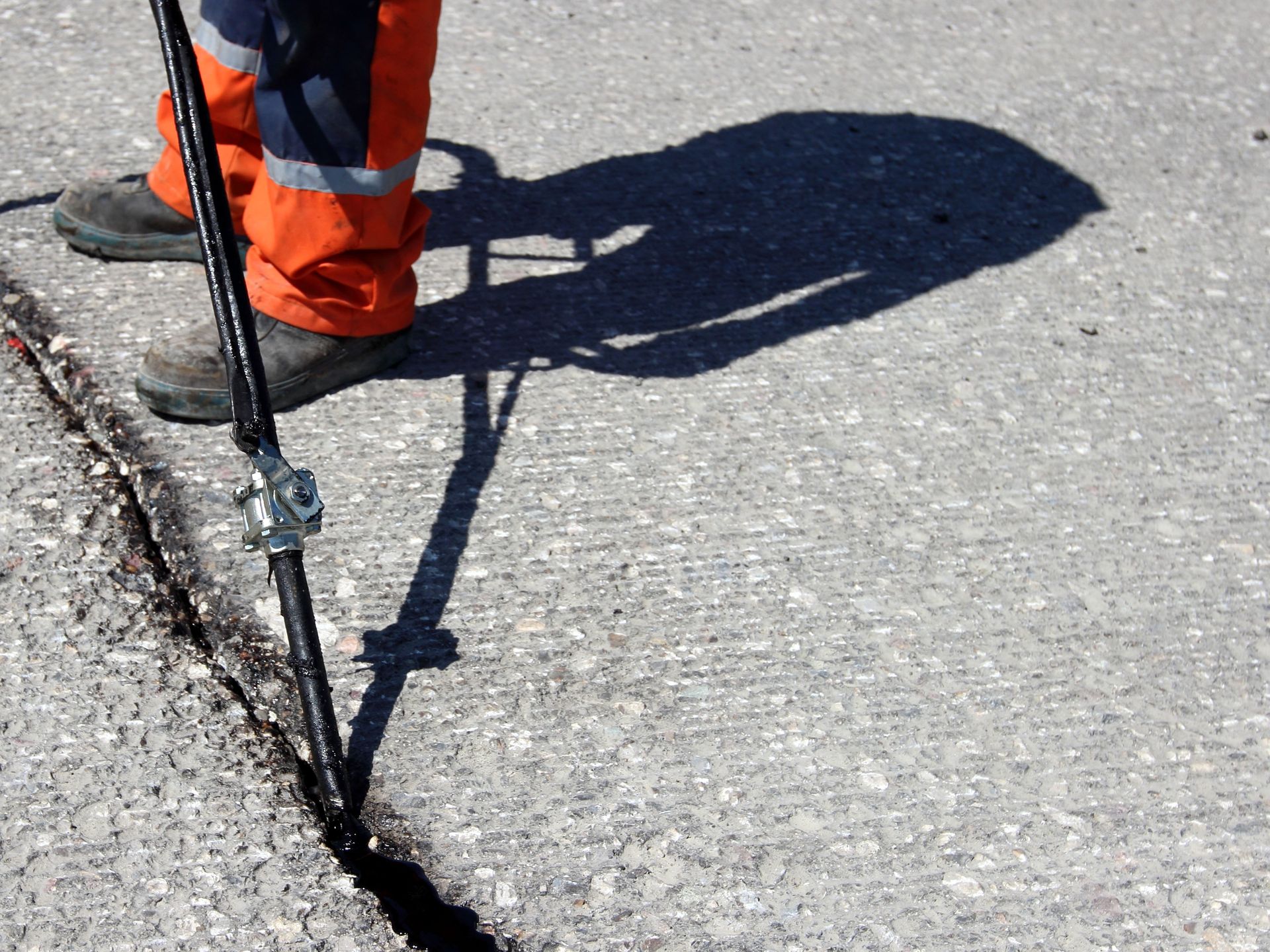
Quality asphalt crack sealers are designed to flex with the pavement as it moves. Applied hot, the sealant bonds with the asphalt and stays flexible, so it can stretch and compress without pulling away from the crack walls. A rigid fill or a simple patch doesn't move the same way, which is why sealed cracks tend to hold up better through seasonal swings.
Sealing the Edges Around Existing Patches
Even a well-done patch creates seams where new asphalt meets old. Over time, those joints can open up as the pavement shifts and weathers. Once they do, water can seep in around the patch, undermining it and the surrounding pavement.
Asphalt crack sealers help protect those seams. By sealing the edges around patched areas, you help keep water out and extend the life of the patch itself. That's one of the clearest examples of how the two repairs work together, with sealing protecting the investment you've already made in patching.
Protecting Large Areas of Pavement Efficiently
Patching is a targeted fix, which makes it impractical for treating widespread cracking. If you tried to patch every crack across a large parking lot, the cost and disruption would add up quickly. Crack sealing, on the other hand, can address many cracks across a wide area in a single visit.
Routine sealing is a standard part of pavement maintenance on a large scale. According to Precision Reports, more than 64 million kilometers of paved roads worldwide need periodic sealing and maintenance, and municipal programs typically apply sealers every three to five years to protect asphalt from oxidation, water penetration, and UV damage. The same approach works for driveways and commercial lots, helping property owners protect their pavement without major disruption.
Blocking Weeds and Vegetation
Open cracks collect dirt, seeds, and debris, creating the perfect spot for weeds and grass to take root. As those plants grow, their roots push into the pavement and widen the cracks. They also trap moisture against the asphalt, speeding up deterioration.
Before sealing, our crew removes debris, vegetation, and loose material so the sealant can bond properly. Once the cracks are sealed, there's no open space left for new growth to take hold. Patching a damaged area won't stop weeds from sprouting in the cracks around it, but sealing removes the opening they need.
Preparing Pavement for Sealcoating and Striping
If you're planning to sealcoat or restripe your pavement, crack sealing should come first. Sealcoat is a surface treatment, and it isn't designed to fill or bridge open cracks. Applying it over unsealed cracks can leave weak spots where water still gets through, and the cracks may show through the new coating.
Sealing cracks before sealcoating creates a smoother, more uniform surface and helps the coating perform the way it should. It also gives fresh striping a cleaner base. Patching alone can't prepare the entire surface for these finishing steps, which is why crack sealing is such an important part of the process. Taking care of cracks first also means your sealcoat and striping investment will look better and hold up longer.
Knowing When You Need Both
Crack sealing and patching aren't competitors. They solve different problems. Patching repairs areas where the pavement has already failed, while sealing protects the surrounding asphalt from failing next. Most driveways and parking lots benefit from a combination of both.
The key is evaluating your pavement and matching the repair to the damage. During an assessment, our team looks at the extent of cracking and checks nearby areas for weak spots. From there, we can recommend the right mix of patching and sealing to restore your pavement and help it last.
At Highline Pavement Solutions, we've been helping property owners throughout Western Washington and Skagit County protect their pavement since 1993. We use commercial-grade
asphalt crack sealers applied hot with professional equipment for a long-lasting bond, and we handle everything from patching and paving to sealcoating and striping with our own in-house equipment. We're licensed and bonded, offer a one-year workmanship warranty, and provide financing options to fit your budget. Contact Highline Pavement Solutions today to request your free estimate.